
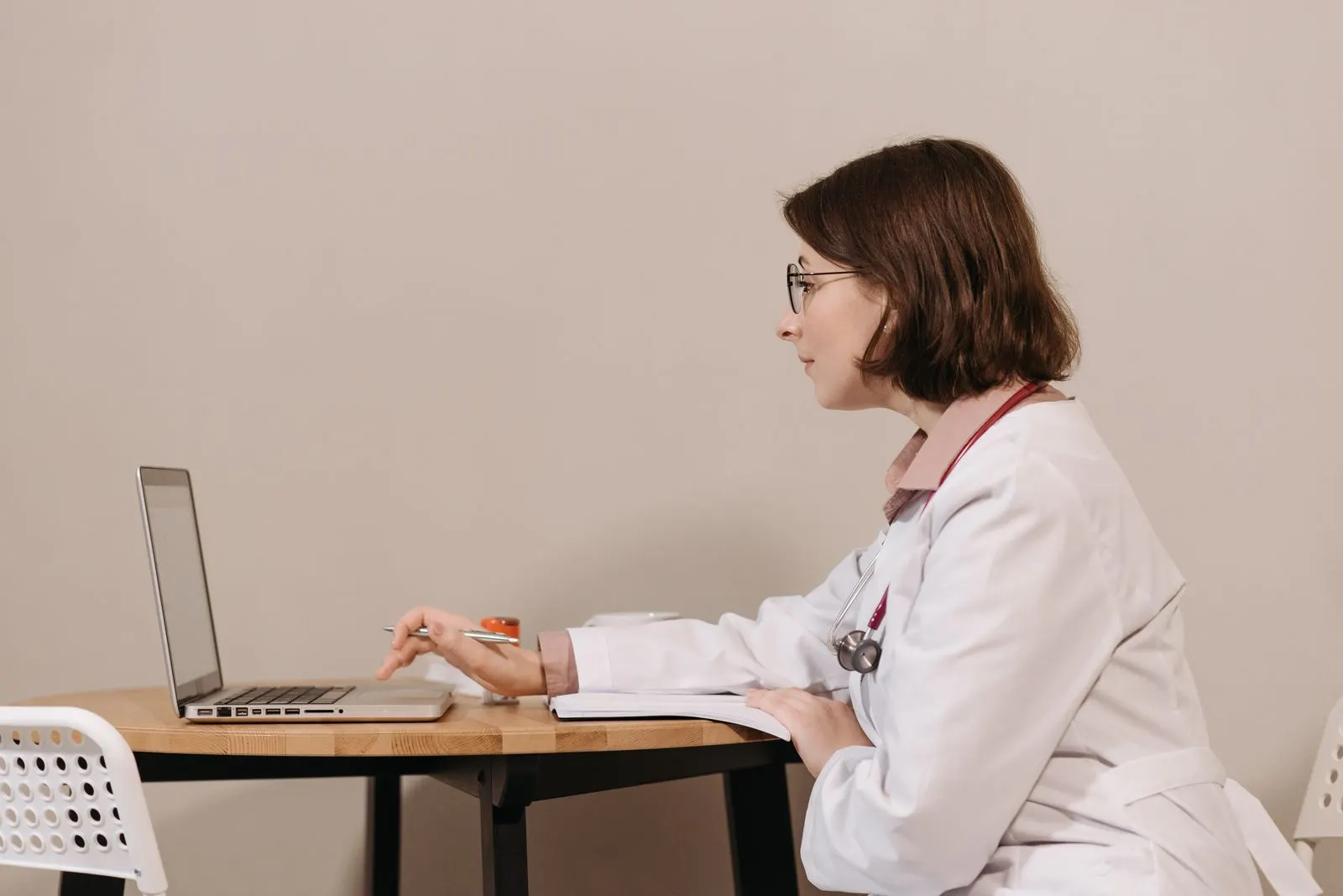

Nursing informatics is the part of nursing that works on the data and technology nurses use every shift, such as electronic records and charting tools. Informatics nurses help design and improve those systems, then teach colleagues to use them. Most hold an RN license and a graduate degree or certificate.
What Does Nursing Informatics Mean in Plain Terms?
Every unit in a modern hospital runs on software. A nurse documents a patient’s assessment in a record, scans a medication, reads a flag that something changed and hands off to the next shift through a screen. Someone decided how each of those screens works. In nursing informatics, that someone is a nurse who also understands the data behind the screen.
The specialty sits between two groups that do not always speak the same language. Clinicians know what a safe handoff requires. Technologists know what the system can do. An informatics nurse translates in both directions and takes responsibility for the result.
ANCC, the nursing credentialing body, calls the field informatics nursing and offers a board certification for it. The American Nursing Informatics Association publishes the Journal of Informatics Nursing and runs guides and toolkits, including one on nursing downtime preparedness, which covers how a unit keeps working when the system is down.
What Do Informatics Nurses Actually Do?
The work varies by employer, so here are the tasks I see across the job titles.
Requirements gathering comes first. A nurse manager reports that medication reconciliation takes too many clicks. The informatics nurse watches how staff do it, writes down the steps and states the problem in terms a build team can use.
Configuration and testing follow. Depending on the team, the informatics nurse changes settings herself or specifies a change for an analyst, then tests it with real scenarios before it reaches the unit.
Training is a big share. Staff need to learn each change, and an informatics nurse runs sessions, writes quick guides and stands on the floor during a go-live.
Data and quality work fills the rest. Informatics nurses pull reports on documentation gaps or medication errors and bring the findings to committees. Some move into analytics roles that handle larger data sets.
This is mostly desk work with frequent visits to the unit. You will sit in project meetings, read specifications and answer support questions. Patient contact drops, and for many nurses that is the biggest adjustment.
Where Do Informatics Nurses Work?
Anywhere an electronic record or clinical technology exists. Hospitals and health systems are the obvious employers. Clinics and long-term care organizations hire informatics nurses too, as do universities and companies that sell health technology.
Titles vary widely: clinical informatics specialist, nursing informatics specialist, clinical systems analyst, informatics nurse, nurse informaticist and, at the top of a hospital ladder, chief nursing informatics officer. The nursing informatics jobs overview sorts those titles by what each one does.
Some employers hire from the floor and train on the job. Others expect a degree. I would not assume either, and a conversation with the informatics team at your own hospital tells you more than any national average.
How Do You Become an Informatics Nurse?
The path runs in four steps.
- Earn an RN license, usually through an associate’s or bachelor’s degree in nursing.
- Practice long enough to build clinical credibility.
ANCC’s certification asks for two years of full-time practice as an RN. 3. Take on informatics work, such as a super-user role or a committee seat. 4. Add a graduate credential, such as a master’s in nursing informatics, a post-master’s certificate or a DNP with an informatics focus.
The graduate step varies by program. Most master’s tracks that state a credit count run 33 to 40 credits, with bridge tracks reaching 66, and post-master’s certificates run 12 to 28 credits. Practicum hours range from 84 at one graduate certificate to 500 and more at several master’s tracks. A DNP carries more: Minnesota’s program lists approximately 1,000 practicum hours, and Arizona’s lists 53 credits.
Most programs are online, though some require the practicum at a site in your state. The online master’s list and the best online programs list sort schools by price and credential fit.
What Skills Does an Informatics Nurse Need?
Clinical judgment comes first, because every decision about a screen or an alert rests on knowing what a nurse needs in the moment. Workflow analysis comes next: watching how people really do a task, which often differs from the policy that describes it.
Communication matters more than most nurses expect. You will explain a technical constraint to a nurse manager and a clinical constraint to an engineer, sometimes within the same hour. Project management fills the remaining gap, since every change moves through schedules and approvals before it reaches a unit.
Data literacy rounds out the set. You do not need to code to start, though comfort with reports and spreadsheets helps, along with an eye for bad data. Some programs add analytics or intelligent-systems content, such as Texas Tech’s informatics and intelligent systems track and Utah’s digital health and artificial intelligence emphasis.
What Does a Graduate Program Teach?
Programs vary in how much of the degree is informatics. Chamberlain’s master’s has twelve three-credit courses: six form the MSN core, and the rest hold three informatics content courses, a practicum and two concluding graduate experiences. The content courses are Practice of Nursing Informatics, Managing Data and Information, and Information Workflow in Healthcare.
Other programs concentrate more. A school that builds its track around quality and safety as well, as UT Tyler does, folds quality improvement into the same degree. Albany State’s master’s lists a Project Management and Synthesis capstone and an Informatics Practicum course.
When I read a curriculum I look for two things. How many courses teach informatics content, against general MSN topics? And does the program name a practicum with a stated hour count? Answers to both let you compare schools on substance.
Course titles tell you part of it. A title like Managing Data and Information describes content, while Advanced Role Practicum describes a requirement. Jacksonville’s master’s lists an advanced role practicum, for example, and Albany State’s names an informatics practicum, so the second title says more about what you will do.
What Is the Practicum and Why Does It Matter?
A practicum puts you inside a real informatics project at a real site, supervised by a preceptor. Programs set different hour counts: Millersville’s certificate lists 84, Grand Canyon lists 200 field experience hours, South Carolina lists 225 clinical hours and Chamberlain lists 216. UT Tyler, Rutgers-Camden, Capella and the University of San Diego list 500 or more.
Two reasons make this the most important line on a program page. Hours count toward ANCC certification, so a program that clears 200 faculty-supervised hours can support the graduate-program route. And the practicum often becomes the project you describe in job interviews.
Site arrangements also vary. Some schools place you. Others expect you to find a site and a preceptor, sometimes in your state of residence. Ask which one applies before you apply, since finding a site while working full time takes effort and lead time.
How Is Nursing Informatics Different From Health Informatics?
Health informatics is a larger field. It takes in health information management and public health data, plus bioinformatics, and many of its jobs never require a nursing license. Nursing informatics narrows to the nursing practice side, and ANCC’s certification requires an active RN license and a nursing degree.
These guides cover the nursing track only. A health informatics track that sits inside a nursing school and serves nurses can count. A health informatics master’s housed outside nursing falls outside our scope, and for a nurse it may lead to different jobs.
If you are unsure, read the program’s own page for the words “nursing” and “RN.” A degree whose admission page never mentions either is probably another kind of degree.
What Is ANCC Certification and Do You Need It?
ANCC offers the Informatics Nursing Board Certification, known as NI-BC. To sit for it you need a current RN license, a bachelor’s or higher degree in nursing, the equivalent of two years of full-time practice as an RN and 30 hours of continuing education in informatics nursing within the last three years.
You also need one of three practice-hour options: 2,000 hours in informatics nursing in the last three years, 1,000 hours plus 12 semester hours in a graduate informatics program, or completion of a graduate informatics program with at least 200 hours of faculty-supervised practicum.
The exam is computer-based, runs three hours and has 150 questions, of which 125 count toward your score. Certification lasts five years.
Do you need it? Employers differ, and some postings prefer it while others never mention it. I treat it as a credential that supports a promotion case, and as the reason to choose a program whose practicum clears the 200-hour line. The ANCC certification guide goes through each route.
What Does Nursing Informatics Pay?
BLS has no nursing informatics occupation, so I use the closest categories. Computer systems analysts show a national median of $105,850 a year. Health information technologists and medical registrars show $68,020. Medical and health services managers show $123,860, and computer and information systems managers show $175,140.
Registered nurses had a BLS median of $97,550 in 2025. These proxies describe broad occupations, so your own offer will land somewhere on a wide range. The nursing informatics specialist salary page lays out percentiles and state differences.
What Are the Downsides of Nursing Informatics?
I would tell a colleague about these before she applied.
- Patient contact shrinks, and some nurses miss it.
- Projects run to deadlines, with go-live weekends and on-call periods.
- A degree adds cost and study time, and the practicum often falls on your own schedule.
- Titles and pay scales vary so much that two jobs with the same name can differ a lot.
None of that argues for skipping it. Test the work before you pay for a degree: ask to shadow your hospital’s informatics team, join a committee or take a short course.
Is Nursing Informatics a Fit for You?
Some signs point toward yes: you fix the workflow when the system makes a task awkward, you like explaining a change to colleagues, and spreadsheets and reports appeal to you more than they do to most nurses.
Other signs point the other way. If the best part of your shift is time at the bedside, informatics will take that away. If you dislike meetings or project deadlines, the job will wear on you.
Between those lies most of us, and the sensible step is a trial: one project, one committee or one shadow day.
If the work still appeals after that, compare programs with the practicum and price you can live with, and read the ANCC certification guide so your choice of school also supports the credential you want. Employer tuition help is worth a conversation with your manager before you apply anywhere.
Frequently Asked Questions
What Does a Nursing Informatics Nurse Do?
Is Nursing Informatics a Good Career for Nurses?
Do You Need a Master's Degree for Nursing Informatics?
How Is Nursing Informatics Different From Being a Super-User?
Can You Study Nursing Informatics Online?
How Long Does It Take to Become an Informatics Nurse?
Sources
- Informatics Nursing Board Certification (NI-BC)
- American Nursing Informatics Association
- BLS Occupational Employment and Wage Statistics, May 2025
- Registered Nurses, Occupational Outlook Handbook
All sources retrieved .